How Symbria Patterson Advanced Organic Farming in Utah
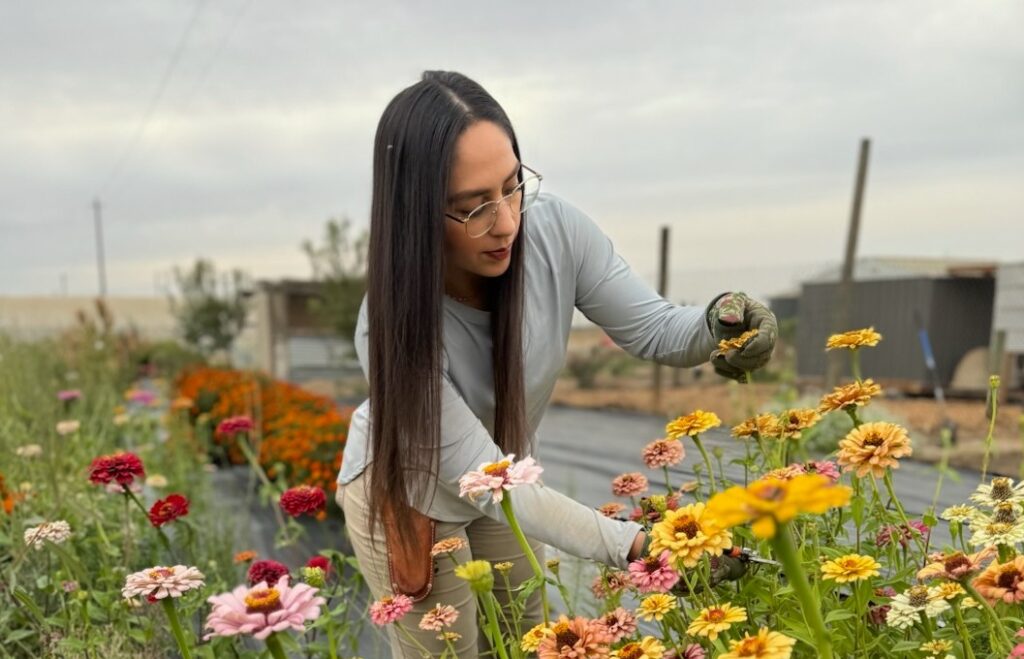
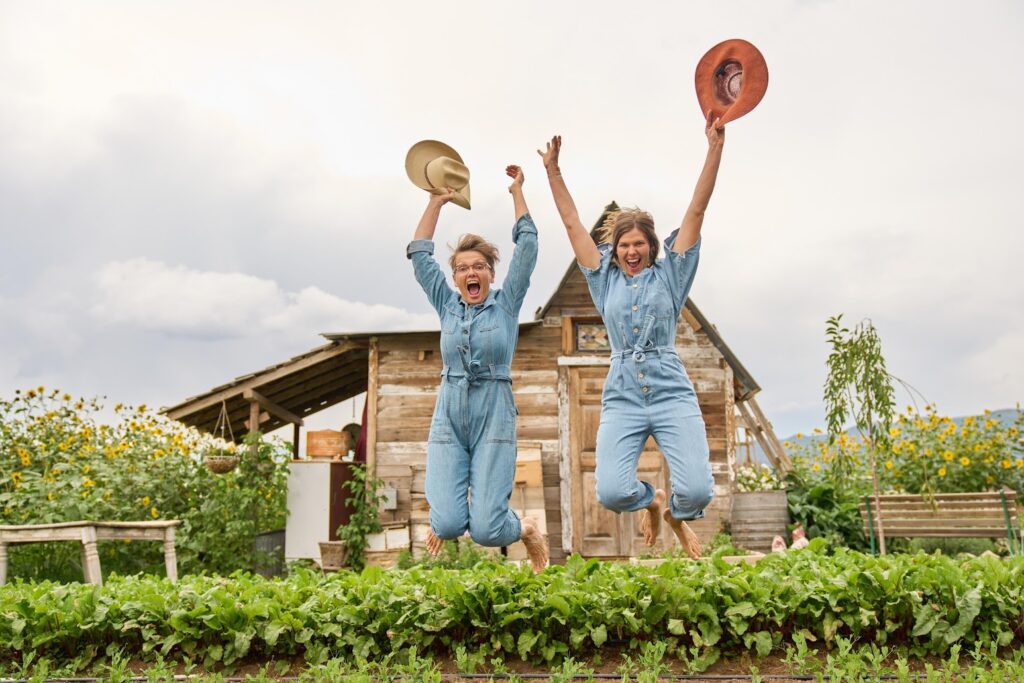
Symbria Patterson brought skills from a career in the nonprofit sector to working full-time supporting Red Acre Farm, a sustainable organic farm in Cedar City, Utah. Red Acre Farm is a family business built by Patterson’s daughter Sara alongside Patterson’s husband Lynn.
Patterson strongly believes in supporting good causes, making local food accessible, and educating the wider community about healthy food and responsible sources. Together with her daughter Sara, she co-founded Red Acre Center, a nonprofit with a thriving CSA subscription that welcomes the public onto their farm for educational events. As their website says, “We are dedicated to growing, raising, and cooking food that sustains our land, our community, and our souls.”
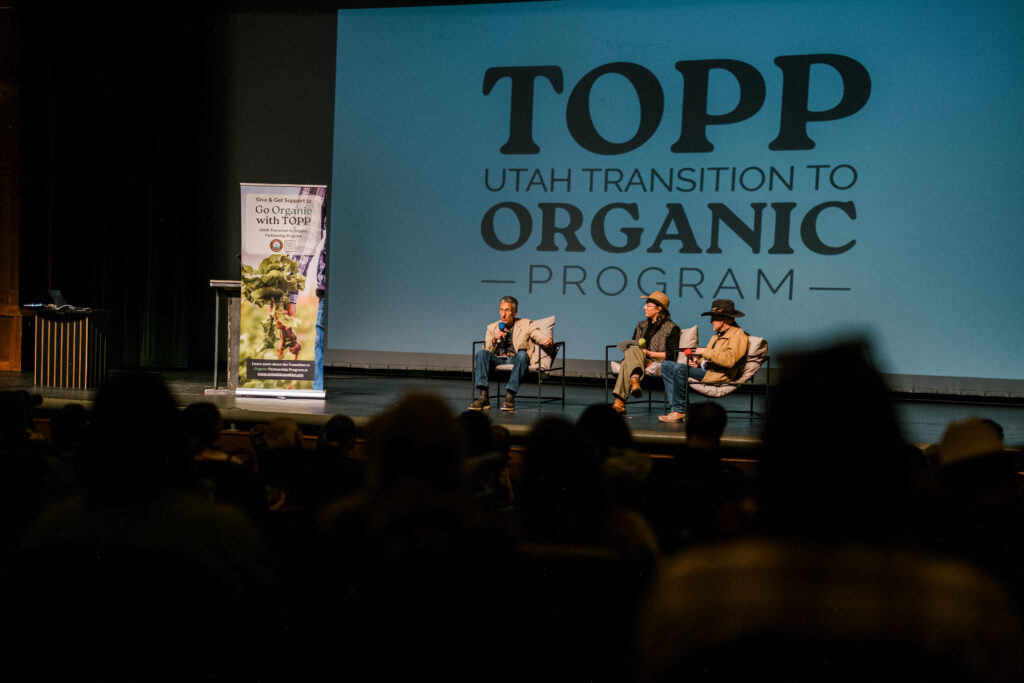
Their farm is now certified organic by CCOF, a transition made possible by the USDA-funded Transition to Organic Partnership Program (TOPP). This program is a nationwide U.S. initiative to provide mentorship, technical assistance, and wrap-around support to transitioning and existing organic producers. Although it is ending in 2026, the program has touched countless farmers with success stories similar to Patterson’s.
“We absolutely became a certified organic farm because of this program,” Patterson says. “We did it to be credible so we could teach from a place of authority, like, this is actually how certification works. Thanks to the grant, we were able to use funding for farmer trainings, holding conferences, and hosting other events that helped people understand what organic is all about.” Through TOPP, Patterson’s daughter became a mentor to help other aspiring organic farmers.
Patterson emphasizes a lack of education as a major obstacle to farmers getting their organic certification. “When we started our conference years ago,” she recalls, “we called it the ‘O-word’. We couldn’t say it was an ‘organic’ conference, because to a lot of people here in Utah, ‘organic’ meant a bunch of hippie liberals in California. They didn’t trust it.”
Nevertheless, Patterson did her best to inform people. “Once, at Walmart, I asked if they had any organic lemons. The guy next to me laughed, ‘That label doesn’t mean anything.’ I told him, ‘Oh boy, did you just say that to the wrong person!’”
Once TOPP was introduced three and a half years ago, Patterson noticed community sentiment changing. “Now that there’s this official grant, you can talk about organic, about wanting to transition as a positive thing,” she says. “Farmers needed this education piece, so when people ask, ‘Does the federal government really care about this label, about not using chemicals?’ we can point to the grant and say, ‘Yes, look, they really do!’ Suddenly, when there’s government money involved, people who wouldn’t have listened are now listening.”
The success of TOPP stands out to Patterson because of the program’s unique structure, which combines a strong national umbrella with individual state groups and a mentor match for farms at a personal level. “It’s for everybody,” she says, “with TOPP, it doesn’t matter how small or big you are, it’s just about whether you can farm the way we used to farm, without all the chemicals, and without going broke or into debt. TOPP pulled the community together.”
Patterson welcomes the influx of grant money that has made events and community education possible on a scale that had never been possible before. “We only had one organic conference here in the last two decades,” she says, “and with this grant we were able to put on a conference. We had potlucks, farm dinners, and every time, there were so many questions. People would ask if going organic is too expensive, and farmers would share the actual numbers of what it cost. We’ve shared endless ideas and possibilities.”
Patterson’s farm used their grant funding to bring in experts from states like Montana and California, where there is a longer history of organic farming than in Utah, to share their decades of experience. “We also talked about the history of farming in Utah. Like, were your grandparents actually organic farmers? They just didn’t call it ‘organic’ back then. Maybe organic farming just skipped a generation or two,” she laughs, “because now we farm like they did.”
The changes in the community have been noticeable. “We used to have only one certified organic farm that sold at a farmers market in the entire state of Utah,” she says. “Now we have a certified organic plant sale up north, and now we have farmers markets up north and down south that have certified organic farmers.” She pauses to note, “How many farms are currently in transition thanks to TOPP? How many more would have transitioned if not for the program ending this year? Things are just really getting going.”
The Utah community seems more receptive to organic these days, Patterson notices. “People absolutely know more now than they did before. I’ve talked to people about the idea that USDA organic is just like USDA inspected meat. There’s no meat in the U.S. that’s not officially USDA stamped. You trust that stamp for your meat, so why shouldn’t you want it for the rest of your food? Only organic vegetables get a USDA stamp. You don’t know what happened to your other vegetables.”
Although TOPP is concluding, Patterson says she will continue to educate her community about the benefits of organic farming. “Our work is essential,” she says. “I mean, we’re not out here making hot air balloons. We feed people! That’s important.”
—
The Transition to Organic Partnership Program (TOPP) is a nationwide initiative supporting transitioning and existing organic producers across six geographic regions of the U.S. (including the West/Southwest region, which CCOF leads).
Interested in participating in TOPP mentorship? This program is funded through 2026 by the TOPP program.
—
Want to support the next generation of organic growers? Donate to the CCOF Foundation. Our organic transition grants provide funding, one to one organic technical assistance, access to mentorship, and business training opportunities to farmers transitioning to organic over a three-year period.