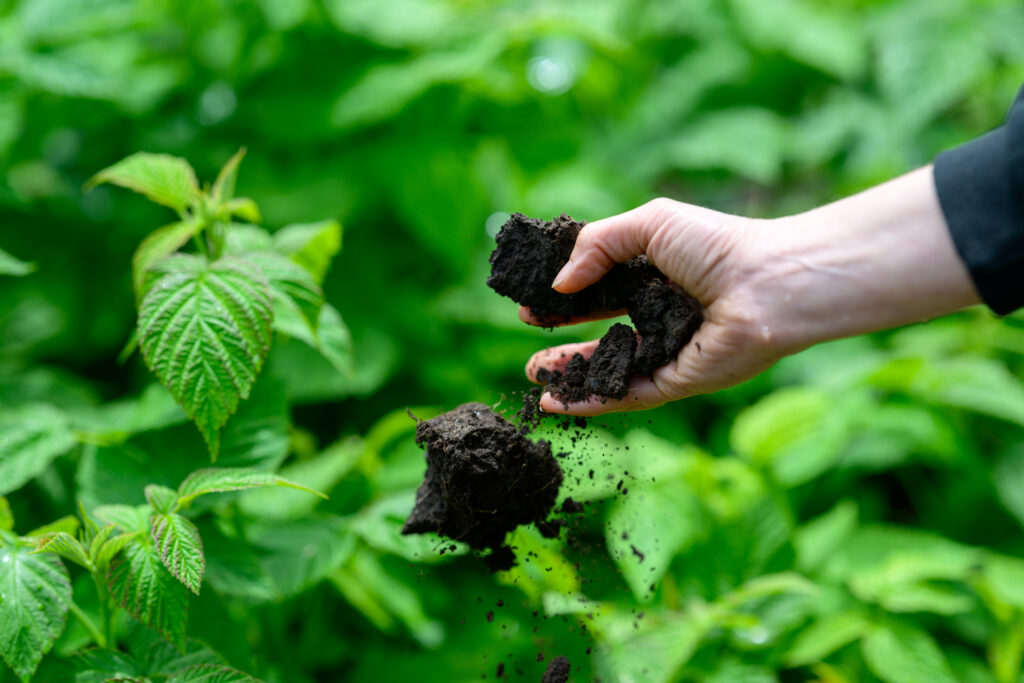
Healthy soils are the foundation of any successful organic farm, and building and maintaining soil health (a requirement for USDA Certified Organic producers) can be a long-term process that looks different depending on what you’re growing, where you’re growing it, and how.
Through the CCOF Foundation’s Organic Transition Program, farmers receive one-on-one technical assistance and access to mentorship to help navigate challenges related to soil health, fertility management, organic certification, and more. In addition to direct support from CCOF Foundation technical specialists, growers also benefit from educational resources (like the How to Go Organic: A Step-by-Step Guide) and guidance provided by partner organizations and experienced organic farmers.
Our Organic Transition Program regularly connects farmers with technical experts through educational events, including Organic Office Hours with organic expert Jamie Collins. For growers interested in learning more about soil health from other experts, we asked Tiziano Celli, CCA, Agronomist at Nitricity, to share a few of his favorite soil health tips and considerations for organic producers.
Celli brings extensive experience in crop nutrition and sustainable agriculture. His work has spanned nitrogen fertilizer innovation, biostimulant research, and plant molecular farming across the United States and Europe. At Nitricity, he manages agronomic trials and research collaborations focused on delivering low-carbon, plant-based fertilizer solutions that support soil health and nutrient use efficiency.
Here are three of his top recommendations for farmers looking to improve soil health and long-term farm resilience.
1. Treat Organic Matter Like a Savings Account
“Organic matter is your soil’s savings account,” says Celli.
Even small increases in soil organic matter can have a meaningful impact on soil structure, biological activity, and water-holding capacity. As water availability becomes an increasing concern for many Western growers, these benefits can help support both productivity and resilience.
The key, according to Celli, is consistency.
“Practices such as cover cropping, compost applications, reduced tillage, and keeping living roots in the ground for as much of the year as possible can gradually build organic matter over time. While results may not happen overnight, these investments can pay dividends for years to come.”
2. Look Beyond the Nutrient Analysis
When evaluating fertility inputs, Celli encourages growers to look beyond the headline nutrient.
“Every input brings more than its headline nutrient, so ask what else you’re adding. In many Western soils, especially those affected by salinity or sodicity, excess salts can reduce yields and negatively impact soil structure. In regions with limited rainfall, those salts may remain in the root zone rather than being naturally leached away.”
Understanding the full composition of fertilizers and amendments can help farmers avoid unintentionally contributing to long-term soil health challenges.
3. Consider Calcium as a Potential Soil Management Tool
Celli also highlights the important role calcium can play in managing sodium-affected soils.
“Calcium displaces sodium, keeps soil aggregated, and improves water infiltration.”
For growers facing sodium-related soil challenges, calcium-containing inputs may provide benefits beyond basic crop nutrition. Selecting products that deliver essential nutrients while also supporting soil structure can help address multiple farm goals through a single application.
As always, soil testing and site-specific recommendations remain important for determining the best approach for individual operations.
Building Soil Health Doesn’t Have to Be a Solo Effort
While soil health principles may be straightforward, applying them successfully requires understanding farm-specific needs.
That’s why one-on-one technical assistance is a core component of the CCOF Foundation’s Organic Transition Program. Participating farmers receive individualized support from technical specialists, mentorship from experienced organic producers, and additional guidance through a network of partner organizations that provide other educational programming and resources.
Whether you’re exploring cover cropping or other soil health practices, or preparing for organic certification, having trusted advisors in your corner can make the transition process more manageable and more successful.
Learn more or get involved at www.ccof.org/foundation.